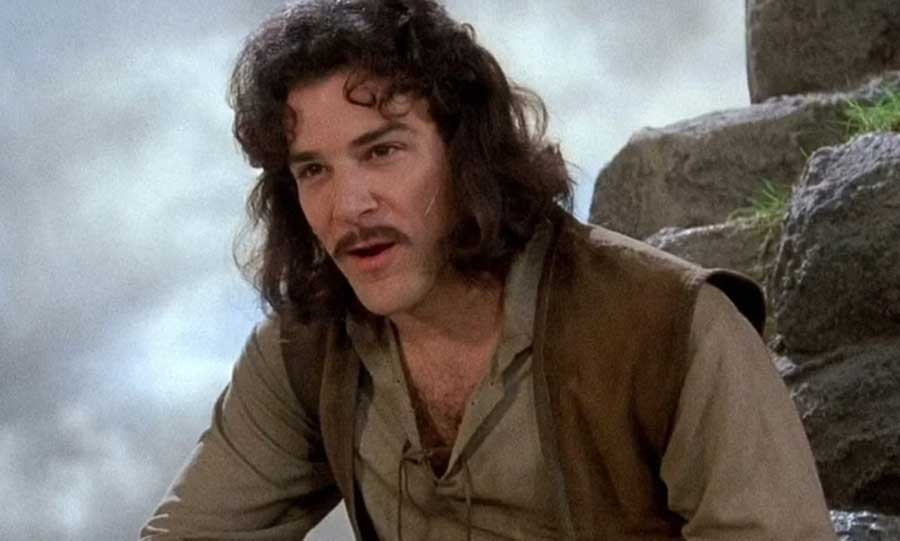
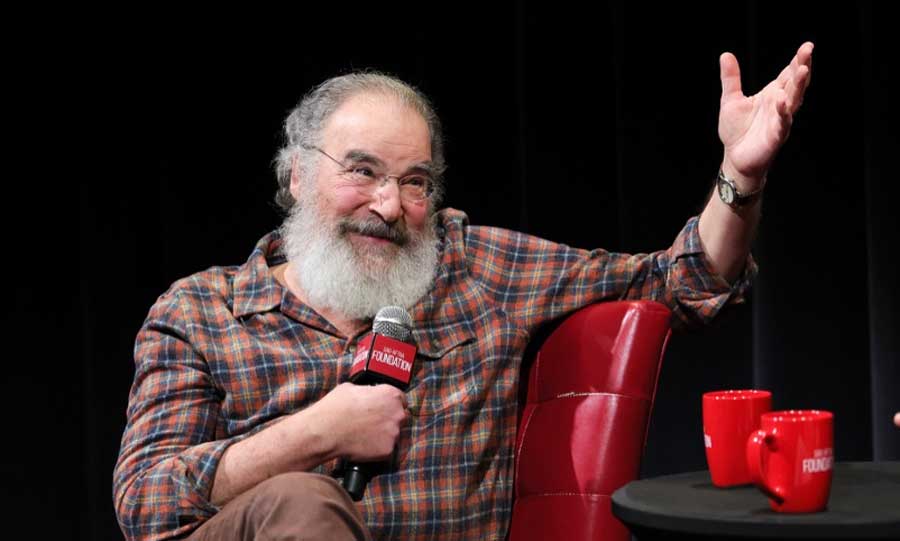
Nearly 40 years after he fenced left-handed in The Princess Bride, Mandy Patinkin hopes to get back on the strip. And this time, he says, it would be with his dominant right hand.
Patinkin, the Emmy and Tony Award-winning actor whose portrayal of Inigo Montoya remains one of the most beloved sword-fighting performances in film history, has joined USA Fencing as a member of its Ambassador Council and will serve as an honorary Team Captain for the Los Angeles 2028 Olympic and Paralympic Games.
The announcement launches USA Fencing’s Ambassador program, in collaboration with the FIE (International Fencing Federation) and World Para Fencing, an initiative that unites artists, athletes and cultural icons who share a belief that fencing changes lives. As the Games return to American soil for the first time in more than three decades, the program’s ambassadors will help introduce new audiences to a sport that blends strategy, artistry and athleticism unlike any other, with further legends of the sword in the arts to be announced.
“When Mandy and I first spoke, what struck me wasn’t the movie, though we got there eventually,” says Phil Andrews, CEO of USA Fencing. “It was how deeply he understood what this sport gives people: discipline, confidence, a community and a lifetime of joy. We could not ask for a better honorary Team Captain to lead our fencers, and our sport, into a home Games in Los Angeles.”
For Patinkin, the road to the role of a lifetime, and to the sport he now champions, began with a script and a memor
“Rob Reiner sent me a script written by William Goldman and asked me if I would like to play the part of Inigo Montoya,” Patinkin says. “The moment I read it, I knew that if I could get that fictional six fingered man, I’d get to visit with my father who had passed away many years before. Bill Goldman described the character as the world’s greatest sword fighter. I knew I had my work cut out for me.”
The training started, fittingly for a future honorary Team Captain, with an Olympic pedigree.
“My first stop was with Henry Harutunian, the Olympic fencing coach at Yale,” Patinkin says. “Henry drilled me on the basics, started with my left hand as I was naturally a right-handed person. I eventually became a better left-handed fencer than a right handed one. That amazes me to this day.”
Then came the legendary swordmaster Bob Anderson.
“Then Bob Anderson took over when I got to England, where we would be shooting the film,” Patinkin says. “I worked every day with Bob when the other actors were filming. We’d meet at lunchtime so we could fence together when I was filming and they would do the same with me. I loved every minute of it. I believe Bob was in his 70s, he never slowed down. He never got tired or looked tired. I think I was 34. I wouldn’t dare say I was tired or ask for a break, but keeping up with Bob was a real challenge. I had five or six months to become the world’s greatest sword fighter, not an easy assignment to say the least.”
What made him love every minute of it? Patinkin answers the question before anyone can ask.
“I thought it was a dance, I loved the music of it, the rhythm of it and the discipline of it,” he says. “There are few things in this world that I love more than watching Fred Astaire or Gene Kelly dance, and getting to sword play with Cary Elwes and Christopher Guest was as close as I ever came.”
Four decades later, the film follows him everywhere.
“Not a day goes by that someone doesn’t come up to me and mention how much that film meant to them during their childhood, during their college days, and now as parents and grandparents,” he says. “Every time I hear those comments, I can’t believe that I got to be a part of that. How does that happen? I think it happened to me because I got lucky. Rob Reiner asked me, Bill Goldman wrote an incredible story with amazing characters, Rob brought us all together, and encouraged us all to put a little bit of a wink in the beings of our characters, Rob said, ‘every now and then just tip your hand a little bit and show one of the cards you’re holding.’ What I think he meant was have fun! And we did, I had one of the best times of my life.”
His fencing education ended with a lesson in humility that any competitive fencer will recognize.
“One of the last things I did with my coach, Bob Anderson, who choreographed a great deal of the fight and taught me every day while I was in London filming, on our final day together, he put the real gear on me, the vest, the wires, the lights and he said, OK, let’s do it for real, which was the opposite of what we do in stage and screen fencing; on the stage and on the screen, we telegraph to the audience what we’re going to do, in competition you let the force be with you,” Patinkin says. “I put on the gear and Bob killed me a million times in seconds. I understood it all instantly.”
What he understood is the same thing USA Fencing’s 50,000 members discover on strips across the country every day.
“Fencing is a true craft, a genuine art form, a thrilling discipline. It requires every cell of your mind & body, but particularly your mind, it’s a form of meditation. It’s not just your physical abilities that count, and they certainly do, but I think the real fun is to get inside the other person’s mind and being, and know when and where they’re going to move before your opponent even knows it.”
His advice to anyone thinking about trying the sport is simple.
“If somebody asks you, would you like to be on the fencing team or learn how to fence or be in a play where you get to fence or a movie where you get to fence just say yes, because it doesn’t get much better than that,” he says. “The only thing I think that comes close is falling in love, having children, and having those children bring grandchildren into your life.”
And to the fencers he’ll now cheer on as honorary Team Captain, from local clubs to the LA28 podium, Patinkin offers a salute.
“I can guarantee you that every competitive fencer who has ever fenced is a much, much better fencer than I ever was or will be. I’m a pretend fencer, the rest of you ladies and gentlemen are the real thing and I bow down to each and every one of you. It is all of you who keep this wonderful tradition alive, and I am honored to be a small part of it,” Patinkin says. “Thank you all for giving it all you got and keeping this sport, this dance, this tradition, alive and well and thriving!”
Patinkin joins USA Fencing’s roster of top-tier ambassadors, a group that will grow in the months ahead as the organization builds momentum toward LA28, where fencing will take center stage at the Olympic and Paralympic Games.
As honorary Team Captain, Patinkin will cheer on Team USA’s fencers on the road to Los Angeles and appear at select USA Fencing events. And, yes, he hopes to pick up a weapon himself somewhere along the way. Whether he would open with his right hand or keep everyone guessing remains to be seen.
Fans can follow the road to LA28 at usafencing.org and on USA Fencing’s social channels.
About USA Fencing
USA Fencing is the national governing body for the Olympic and Paralympic sport of fencing in the United States, dedicated to inspiring a lifetime enriched by fencing. Headquartered in Colorado Springs, Colorado, USA Fencing is recognized by the U.S. Olympic & Paralympic Committee, the International Fencing Federation (FIE) and World Abilitysport and serves more than 50,000 members and 750 clubs nationwide. For more information, visit usafencing.org.